Friday, November 23, 2012

The Skinny: Nancy Drew is Eighty-Two!

They are easy to spot--those trademark yellow spines. We see them on a weekly basis, either on our own shopping trips, or in neat little stacks on the front counter of the shop where we work. She may have gotten her start in 1930, but Nancy Drew is clearly still going strong.
wendy-spoileralert.blogspot.com


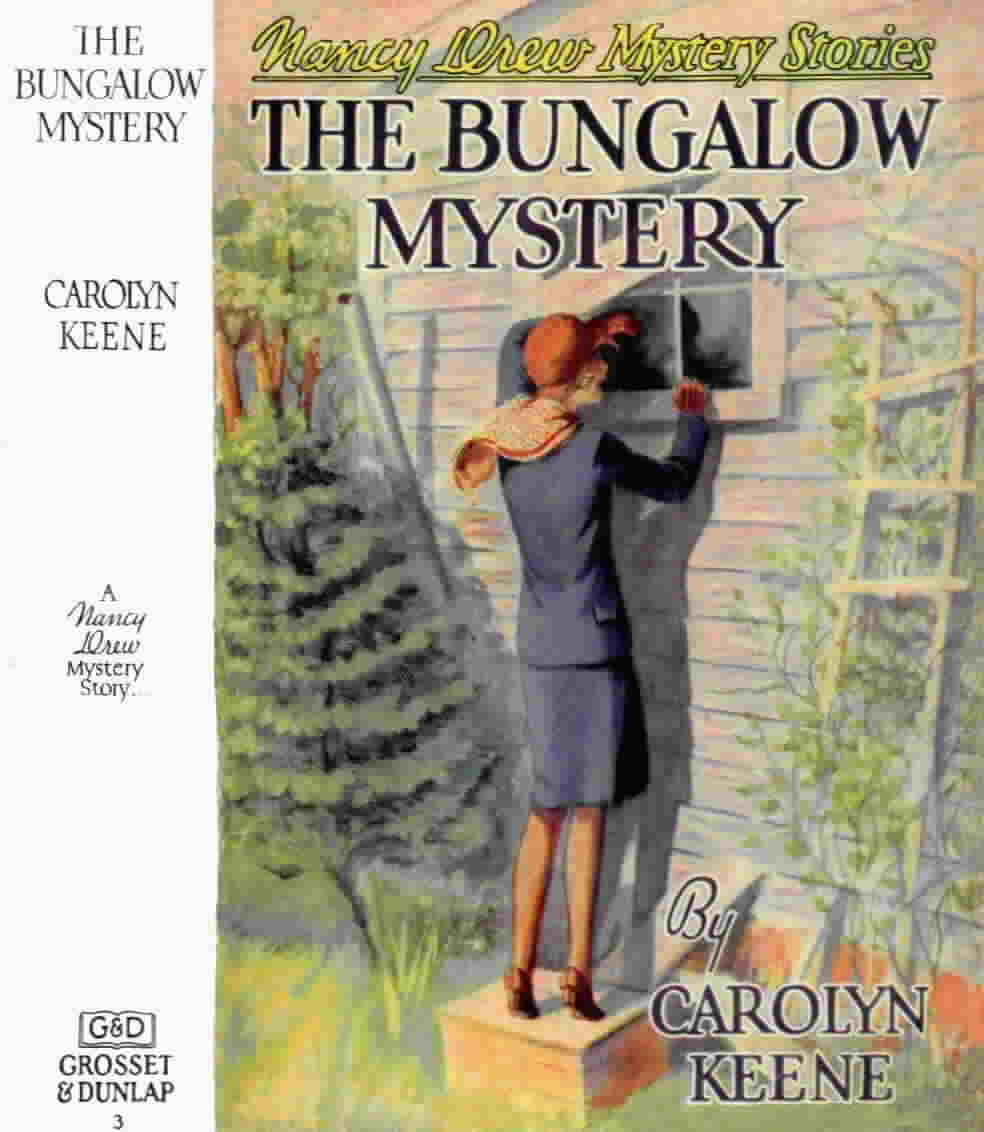
 From 1930-1961, Nancy's stories (#1-#38) were bound in blue, with a graphic dust jacket. The yellow binding began in 1962. And it's not just the covers that evolved. The plots, characters, even Nancy herself changed through those first 56 books. Initially, Nancy's best friend is Helen Corning. Bess Marvin and George Fayne take over as Nancy's closest crew by book 5, and remain essential characters for the rest of the series. Ned Nickerson is introduced in number 7, but Burt and Dave (beaus of Bess & George) don't enter the group until book 20 of the original series. When the early books were revised, the fellows were written into several of them.

In 1938 and 1939, Warner released four Nancy Drew movies, starring Bonita Granville, which further strengthened the popularity of Ms. Drew and her friends (even if her boyfriend in the movies is Ted instead of Ned).  These films take elements from the books, so the plots are a bit of hodgepodge, but highly entertaining.


Some of the changes throughout the initial series are due to the fact that the author, Carolyn Keene, was at least eight different people, hired as ghost writers. Nancy begins the series as a vivacious, adventurous blonde, and transitions to a cool, perfect girl with more skills than her entire social circle (Nancy can do anything!), and never a reddish-blonde hair out of place. Other changes to the series came in the form of revisions to the early titles, which smoothed out racial issues, updated appropriate social standards, and beefed up, or completely replaced, the original plot lines. For this reason, a side-by-side comparison of Nancy Drew books often yields different cover art, different page and chapter numbers, different internal illustrations, and completely different characters, even though your two books have the same title.
The Bungalow MysteryThe Bungalow Mystery


Nancy now has over 500 adventures under her belt, and has been published in at least 26 different languages, but those first 56 books are, without question, THE Nancy Drew series. However, her international popularity cannot be denied, even if many countries have changed her name (the French know her as Alice, and in other nations she is Kitty). The Danish seem to think that she is sexy:

The Clue in the Diary
#7, The Clue in the Diary

And, of course, Nancy also tends to be highly collectible in alternative formats:

lobby card for one of the films

Madame Alexander Nancy Drew dolls

Earliest version of the Nancy Drew board game


Wednesday, November 21, 2012

On the Radar -- Walk the Line

Dolce & Gabbana, Spring 2013

Continuing on in our look towards spring, the Spring 2013 runways were covered with stripes -- from Marc Jacobs to Michael Kors to Dolce & Gabbana.  Since stripes are one of those classic elements that never really seems to go away, I thought I'd just give a glimpse at how they have been reinterpreted.

They can be bold and graphic:

Marc Jacobs Spring 2013

Diagonal and bright:

Issey Miyake Spring 2013 from WWD


Sheer and Gauzy:

Dior Spring 2013

Summery and classic:

D&G Spring 2013

Try vintage to get your fix, like this bracelet from Jennie's Junque on Etsy:


Or this 1970s shirt from our shop!


Monday, November 19, 2012

Junk Love Monday: The Distant Ten

So, we've given away our top shops, big and small, in North Carolina. This week, we whisper into your ear the ten best shops that we've encountered while traveling in other states. Again, in no particular order, we present the following delicacies for your enjoyment:

1. Greater Columbus Antique Mall, Columbus OH
One of our favorite shops that we've ever been to. The layout is confusing, but a fun sort of adventure if you don't mind stairs. They do have an intercom system, but if you need more than one type of help, be sure and speak fast. Otherwise, a speedy employee will appear silently at your elbow, but you'll have to send him to the front desk and back again if you want him to be able to help you with anything else. Example: we needed 3 cases opened in the same area of the shop, but before we could finish describing what we needed over the intercom, someone was there with just one of the needed keys. We had to wait for him to go back for the other two keys, and by the time he got back, we had spotted something in yet another showcase. We tried to catch him over the intercom, but he was just too fast. Those people get their exercise....

Check out their blog: http://greatercolumbusantiquemall.blogspot.com/


2. The Factory Antique Mall, Verona VA
Over 90,000 square feet of stuff. We tried, and failed, to do this mall at a quickstep in 90 minutes. One entire zone went unexplored, but alas, even antique mall employees should get to close up shop and go home every now and then.

Their website: http://www.factoryantiquemall.com/Browse-the-FAM.html

3. Ingrid's Antique Mall, Santee SC
Located at the Santee Outlets, a mostly-dead outlet mall with fewer than 10 shops still open. Ingrid's was hopping, though, and we had to closely monitor our competition so that we didn't miss out on some fine merchandise. Willing to negotiate, and very nice about it. I got 2 pieces of Rookwood for less than $100, and some giant nesting dolls, which bring me joy every time I look at them.

4.South Charleston Antique Mall, Charleston WV
The people here were very nice, and we found some fantastic deals. Best find: a vintage blue spun acrylic light fixture for...well, perhaps I'd better not say. I will say that we spent less on the light fixture than we did filling up the gas tank on our way out of town.

Go!: http://southcharlestonantiquemall.com/

5. Medina Antique Mall, Medina OH
Huge. They regulate their merchandise--items on the main floor have to be at least 40 years old, and there is a separate wing for stuff in need of TLC. They do not take offers. Do not ask for a discount. It makes them unhappy. But, we found some great things, most notably, two framed pinups and some great vintage clothing.

Go!:http://medina.antiquelandusa.com/default.aspx/MenuItemID/508/MenuGroup/Medina.htm

6. 57th Street Antique Mall, Sacramento CA
Part of "Antique Row", where you can park once, eat at Evan's Kitchen (fabulous!), and shop all day. Pure California bliss....

7. Stuff SF, San Francisco CA
I still get palpitations when I remember strolling across San Francisco on a sunny day, not even looking for a junk shop, and then--there it was! I spent several serious moments mentally calculating shipping costs, extra baggage fees, and whether or not an ice bucket would fit into my carry-on, before settling on some unframed pinups. But oh, the memories!

Check out their Facebook page: http://www.facebook.com/pages/Stuff-SF/192817254063217

8. Pages Past, Kingston NY
My favorite used bookstore ever. The proprietor makes good conversation, but not too much--I love a guy who knows when to leave me alone with the books. Bonus--it is an easy walk to Stella's Italian Restaurant, quite possibly our favorite Italian restaurant (outside of Italy, of course). Books and carbs and cheese!!!!

9. Nostalgia, Knoxville TN
Already mentioned in our previous post about the Tennessee trip. Fabulous!

Go!: http://www.nostalgiamarket.com/

10. Old Raggedy Ann Antiques, Etlan VA
We found this shop while taking the scenic route on a snowy morning as we meandered toward Pennsylvania. It was the first shop we had seen (the first sign of people, actually), so we figured that it was a good place to stop, stretch our legs, and get a mini junk buzz. It turned out to be one of our top stops from that entire trip. Plus, the area is gorgeous.

Go!: http://oldraggedyannantiques.com/

Friday, November 16, 2012

The Skinny -- We're Thankful...

Image by Anne Taintor, Inc.

We love a holiday.  Any holiday.  As long as we get to celebrate by eating good food, and decorate with cool vintage finds, we are happy as can be.  But Thanksgiving holds a special place in our hearts -- from family drama (um, please don't mention that thing to so-and-so...) to dessert smorgasbords (hello, I need carrot cake!) to turkey sandwiches the day after (must be white bread, with mayo and pepper), we love it all.  At the heart of it, we're both of us very strongly rooted in our family traditions.  We have large families, and though they have shifted and changed through the years, there are certain things that are steadfast and unchangeable.  And for that -- we are thankful.

So, as we all get ready to gorge ourselves on our holiday feasts, we Blackbird girls thought we would share a few interesting facts about the holiday known for ginormous turkeys and pumpkin pies.  You may be surprised about what you will learn...


Screen print by McCaffrey, 1954
 
  • The idea of Thanksgiving as we know it comes from a woman named Sarah Josepha Hale. Hale was editor of Godey's Lady's Book and penned the "Mary Had a Little Lamb" nursery rhyme. She spent 40 years writing letters to anyone who would listen, fighting for a national, once-yearly Thanksgiving holiday. Especially during the years culminating in the Civil War, she saw the holiday as a way to unite the nation.
  • On October 3, 1863, President Abraham Lincoln finally listened to her and issued a Thanksgiving Proclamation that declared the last Thursday in November to be a day of "thanksgiving and praise." For the first time, Thanksgiving became a national, annual holiday with a specific date.
  • In 1939, Thanksgiving was going to fall on November 30. Retailers complained to President Franklin Roosevelt that this date cramped their sales by only leaving 24 shopping days until Christmas. They pleaded with him to push Thanksgiving up a week earlier. When FDR declared his Thanksgiving Proclamation in 1939, as had become the tradition of presidents, he announced the date of Thanksgiving to be Thursday, November 23 -- the second-to-last Thursday of the month.
  • Whereas President Lincoln had started the Thanksgiving holiday as a way to unite our country, this date change tore us apart. Confusion and anger ensued, and sales didn't really change that much for the better.  So, on December 26, 1941, Congress passed a law that stated that Thanksgiving would forever be on the fourth Thursday of November. 


  • In 1953, Swanson started creating T.V. dinners because it needed to find something to do with the leftover frozen Thanksgiving turkeys.  Put it in a frozen meal package!
  • Green been casserole was created over 50 years ago by Campbell's soup for it's newest cookbook.  Now, Campbell's sells around $20 million worth of cream of mushroom soup, most likely for people to make the casserole.  
  • The first Macy's Thanksgiving Day parade was in 1924, and included 400 employees marching off from Convent Avenue and 145th Street in New York City. They borrowed live animals from the Central Park Zoo to walk in the parade with them.


 Have a Happy Thanksgiving, ya'll!!

*Info from http://history1900s.about.com/od/1930s/a/thanksgiving.htm and http://www.huffingtonpost.com/2011/11/21/thanksgiving-trivia-facts_n_1106005.html#s489085&title=What_Is_The 

Wednesday, November 14, 2012

On the Radar -- Honeycomb

Colored honeycomb from France.*
Nature is the eternal inspiration for design.  Almost everything we, as humans, make, somehow references the perfection of nature's design.  Bees are so incredibly interesting, from their little monarchies to their honeymaking.  The photo above is not really a good thing -- bees in this area of France have been making this colored honey because they are gathering residue from M&Ms containers in a waste facility nearby.  The resulting honey is unsellable for the beekeepers, and it's not good for the bees.  Even so, this is nature and man designing together somehow, creating beauty that is so complex, yet so elemental.

Bees and honeycomb patterns can be traditional, or they can be translated into modern items.  Forever popular, this is not really a trend, per se, but rather some new takes on an old design. What's old is new again, right?

This is the first image that caught my eye -- honeycomb in copper lacquer:

Tom Dixon, from Elle Decor Nov 2012

And here's the next one, two pages later in my Elle Decor.  I immediately said, "Oooooooohhh..."

Arteriors Pendant Lights

Art installation by Aleksandra Zee:

aleksandrazee.com

My shameless inclusion of Alexander McQueen**, with the 2013 line, inspired by bees and beekeeping:


And finally, just to prove our point that vintage is just as relevant, here's some lovely glasses from Etsy:

From Sweet Potato Jack on Etsy

*Photo from blogs.voanews.com
**We're going to have something McQueen in the blog about 95% of the time.  We LOVE him and his line, if you can't tell already... And his work (as does his successor's, Sarah Burton's) always inspires us.

Monday, November 12, 2012

Junk Love Monday: The Little Ten

Last week, we shared our favorite large antique malls in North Carolina. This week, we dish on our top ten smaller antique and vintage shops in our home state. Once again, in no particular order, here are our favorite smaller destinations for a junk fix:

1. Deja Vu, Asheboro NC
Run by two of our favorite antique dealers, Carol & Ernie Pollard, this shop has a perfectly cultivated selection of cool and chic. You can find a cowhide chair, a 6' high mirror, and French lithographs alongside rugged outdoor furniture and vintage signs. Plus, there is a bakery right next door!

2. Beggars & Choosers, Pittsboro NC
Great for Mid-Century lovers. This shop also has a bargain basement, as well as vintage clothing and jewelry upstairs. Plus, it's right up the street from the legendary S&T Soda Shoppe, where you can get a Cherry Smash and a sandwich for lunch.

3. Black Dog Emporium, Lexington NC
This shop is on Main Street. It is small, but has some great dealers who specialize in a wide range of items. You can find vintage medicine bottles, old radios, books, a little bit of clothing, and some great housewares. There is a great ice cream shop on the adjacent corner.

Here is their Facebook page: http://www.facebook.com/pages/Black-Dog-Emporium/208472819166830

4. Heirlooms Antiques & Decor, Asheville NC
This is in Biltmore Village, and the people are so nice. We like to go to the BBQ place nearby, hit this shop right after lunch, and then move on to one of the larger Asheville malls that is just a few miles down the road.

5. The Old Hardware Antiques, Cameron NC
This is a small multi-dealer antique mall, and the historic Dewberry Deli is downstairs. Apparently, we like shops that are close to food, especially if there is ice cream and/or cookies involved....

6. This Old House Antiques, Cameron NC
This shop is a feast for the eyes. It is small, but packed to the gills with stuff. We showed up 15 minutes before closing, and still ended up with three boxes of junk. Plus, it's right down the street from the Dewberry Deli....

7. Hong Kong Vintage, Charlotte NC
Another Mid-Century mecca, with an emphasis on vintage clothing. In a very cool neighborhood, with a very nice website. We didn't look for ice cream this time, but there probably is some. Our radar for sugar is top notch.
Go!: http://www.hongkongvintage.com/contact

8. Design Archives, Greensboro NC
This place is part vintage, part art shop. You can browse booths of 1950s cocktail ware, followed by displays of local art, and they have an entire wing of vintage clothing. Cheesecake is to be had right across the street! Mmmmm....

9. Black Mountain Books, Black Mountain NC
My favorite used bookstore. I could spend hours here. Plus, it's a great place to get custom library stools. There used to be an ice cream shop across the street, but it closed. However, there is a chocolate shop! Book shopping makes truffles taste even better. Trust me.

10. Timeless Treasures, Southport NC
Lots of interesting items, and surprisingly, not too beach-oriented. There are several other small shops nearby, but these are a little more specialized (especially vintage quilts). And (drumroll, please), you can eat at the Pharmacy Restaurant a few doors down!

Go where we go! Keep them in business! Plus, we can almost guarantee a sugar high at some point during your trip.

Friday, November 9, 2012

The Skinny: The Fairer Sex Goes to War

"Rosie the Riveter" is one of the most recognizable images from the WWII era, symbolizing the essential role of women in industry while their men were away at war. A Google search will get you dozens of images of grease-smeared women with drills, welding torches, and heavy machinery, working long hours to build the implements of war and hold our country together. But, people sometimes forget the women who held it together in the war--the WACs, WAVEs, and other groups of women volunteers who got dirty, in a thousand other ways, so that combat soldiers could actually engage in combat. We tend to think of them in a cute South Pacific, pin-up sort of way (washing that man right out of their hair), but they deserve to be recognized for their contribution to freedom.

 The idea of women as support staff pre-dates World War II. There have been field nurses for much longer than that (remember Florence Nightingale?). In addition to the thousands of nurses who signed up, women volunteers drove ambulances in World War I, a task which may seem low-risk and of no great importance. But think about it--the ambulances had to go where the wounded soldiers were. And the wounded soldiers were on the battlefield. Sometimes, retrieving the wounded meant bullet holes in your ambulance. 


Hello Girls

The Hello Girls, also known as the Signal Corps Women, were sworn into the Army to serve as multilingual telephone operators for essential communications. Sadly, they were demoted after the war, so that they would not qualify for veterans benefits. And we're not even going to delve into the vast numbers of women who managed to actually serve, and die, in combat. (Most military organizations like to pretend that never happened.) In World War II, the demand for military nurses was so high that FDR tried to initiate a draft for females. It stalled, however, and the draft idea disappeared by the end of the war.

In 1942, the Women's Army Auxiliary Corps (WAAC) introduced females into the US Army to serve as support and communications staff at designated sites to monitor for potential attacks on US soil. They were sworn in, trained, and given uniforms like every other soldier. The group started with 6,000 women, and after the initial trial run, the Army requested another 500,000. They didn't get their wish, because certain commanders, including General Eisenhower, were opposed to the idea of women in the military. (He quickly changed his mind, after seeing the results of their service, and became one of the greatest supporters of the group for the last few years of the war.) By 1943, the corps had gained enough of a reputation for the "auxiliary" term to be dropped, leaving them officially designated as the Women's Army Corps. Now, the women were no longer civilians, but active members of the United States military. They were more commonly called WACs, and by 1945, there were over 32,000 of them. The WACs were represented in at least 200 specialty jobs for the military, in every operational zone of the war. There were even 1,100 black women who enlisted and served in segregated units.


Also in 1942, two units of qualified female pilots, enlisting as civilian volunteers, were created. The Women's Auxiliary Ferrying Squadron (WAFS) transported bomber and fighter planes to combat zones. The Women's Flying Training Detachment received additional flight training, so that the women pilots could take over non-combat flying duties for male pilots, thereby freeing up more male pilots for battle. In August of 1943, the two groups were combined to form the Women's Airforce Service Pilots. In addition to plane transport, the WASPs also served as instructors for the Eastern Flying Training Command. The group was disbanded in late 1944, and again, the female pilots would not be able to claim privileges as veterans.

WASP training

1942 was, apparently, an important year for women's service. Mildred McAfee, the first female commissioned  officer in the US Navy, was sworn in as Naval Reserve Lieutenant Commander and put in charge of a new group of women: Women Accepted for Volunteer Emergency Service, also known as the WAVES. This was not a novel idea. In fact, the US Navy utilized female civilian volunteers during WWI as well, but this time around, the training was more detailed and the job descriptions more complex. And the numbers were huge--women flocked to volunteer for service, especially since the navy had, oddly enough, traditionally been more supportive of women than certain other branches of the military. Within the first year, there were 27,000 WAVES. Clerical jobs were, of course, the majority (but imagine coordinating millions of soldiers and commanders without people to transfer messages, answer the phones, and organize paperwork). This time around, however, some new duties were added for the enlisted women: aviation, legal, medical, intelligence, scientific research, and technology labs. communications, intelligence, science and technology. By the time the war ended, 2.5% of navy personnel were women, many of them officers.

 The Coast Guard joined suit, forming the SPARs in 1942. These women enlisted in the Coast Guard so that the men could then be dispatched overseas for combat. Many of these were WAVES who agreed to an official discharge from the NAVY. They were restricted to coastal waters of the US, and were forbidden to ever issue an order to a male, but were, essentially, filling many of the regular duties of the US Coast Guard. There were also women in the United Service Organization (USO), the American Red Cross, and the Civil Air Patrol. And, somewhat surprisingly, the United States Marines welcomed women into service. With WACs, WAVES, SPARs, and WASPS, everyone expected a clever acronym from the Marines, who are infamous for their sense of humor (ha!). Instead, the Commandant said in an interview for Life magazine, "They are Marines. They don't have a nickname and they don't need one. They get their basic training in a Marine atmosphere at a Marine post. They inherit the traditions of Marines. They are Marines."

http://womenofwwii.com/images/coastguardspars/coastguardspars9.jpg
Shooting range practice at SPARS academy

 All told, over 400,000 women served with the US Military during World War II. During the war, many of them won Purple Hearts, Bronze Stars, and other awards for service. Many of them died alongside their male colleagues. Most of them were discharged as soon as the conflict ended, and sent back home to be wives and mothers (like much of the female industrial workforce). Decades later, legislation allowed some of them to receive Veterans status, and the appropriate benefits and privileges. This Veterans Day, as you think of the people who have served, and are serving, our country, consider the women who worked hard to preserve our freedom decades ago, who were underestimated and unrecognized for the majority of their lifetimes.


Elizabeth L. Gardner, WASP


*Information obtained from: http://womenofwwii.com/coastguardspars.html; http://www.uscg.mil/history/WomenIndex.asp; http://www.uscg.mil/history/WomenIndex.asp; http://www.history.navy.mil/photos/prs-tpic/females/wave-ww2.htm; http://www.malvernmemorialparade.com/2010_wacs-waves.htm; http://www.firstworldwar.com/features/womenww1_one.htm