Showing posts with label Joan Crawford. Show all posts

Friday, April 19, 2013

The Skinny: Gilbert Adrian

"Tigress Ensemble", from Adrian's 1949 collection
A Connecticut native, Adrian Adolph Greenberg began designing costumes while a student at the New York School for Fine and Applied Arts (now Parson's) in the early 1920s. He transferred to the school's Paris campus, where his designs caught the eye of Irving Berlin, who hired Greenberg to do the costumes for The Music Box Revue in 1922 and 1923.

Although he continued to produce costumes for Berlin's endeavors, his first real movie job was designing for an MGM production called The Merry Widow in 1925. The same year, he was commissioned to design custom costumes for Rudolph Valentino, as well as the wardrobe for the introduction to The Gold Rush. This work brought him to the attention of Cecil B. DeMille, one of the most famous film directors of the era (and possibly all time), who hired Greenberg to be the head of his wardrobe department. In 1928, DeMille signed with MGM, taking the designer with him, and when DeMille parted ways with the studio, Greenberg signed a contact directly with MGM, and worked for them until 1942.
 
Adrian gown for Eve Arden, Ziegfeld Girl (1941)

Adrian gown for Joan Crawford, Letty Lynton
Greenberg created a pseudonym using his father's name and his own first name, and was frequently credited as "Gilbert Adrian" for his costume work. However, the majority of his films simply stated "Gowns by Adrian" in the credits, and the name "Adrian" became known as a fashion institution of the 1930s and 1940s. In fact, when stores began producing knock-offs of his designs, the tag or advertisement often stated that the piece was "Adrian style" or "Adrian cut."

Adrian draped brown taffeta gown
His work is legendary--not only did he design the costumes for The Wizard of Oz (including the infamous ruby slippers!), he did gowns for Katharine Hepburn in Woman of the Year and The Philadelphia Story, as well as Marie Antoinette (1938) and The Women (1939), which featured a dazzling fashion show of Adrian's finest designs. Other films featuring costumes by Adrian include Ninotchka (1939), Broadway Melody of 1940, Lady be Good (1941), and around 242 other films. Leading ladies like Greta Garbo, Judy Garland, Greta Garbo, and Norma Shearer frequently wore his designs, and he is credited with creating Joan Crawford's iconic "triangle" look, with broad shoulders and a tiny waist. In fact, his looks for Joan Crawford are among his most famous, particularly those featured in The Bride Wore Red and Letty Lynton. He also perfected the classic 1930's-style bias-cut gowns that became Jean Harlow's signature style.

Beaded ensemble for Joan Crawford, The Bride Wore Red
Katharine Hepburn, The Philadelphia Story

Adrian gown for Marie Antoinette
Greta's Mata Hari costume weighed 50lbs.

Adrian also designed ready-to-wear for exclusive stores in several cities. He was particularly known for his hooded suits, which added an air of mystery to the woman who wore them.


And in case you are unfortunate enough to have never seen The Women (the original, of course, as the new one is a waste of film), you can view it here: http://www.tcm.com/mediaroom/video/337425/Women-The-Movie-Clip-Into-The-Future.html


*Information obtained from www.imdb.com and www.tcm.com


Friday, March 15, 2013

The Skinny: Look Like a Movie Star With Max Factor

I've grown up hearing about Cover Girl, Revlon, Maybelline--all of the big names in cosmetics, and I've always taken for granted that makeup is makeup, and women (and men) use it to look different. I never really thought about the historical importance that a particular brand of makeup would have (and, consequently, the man behind the name). But then there is Max Factor.

Vintage Max Factor makeup kit, from thecostumermanifesto.com

Max Faktor started out as a pharmacy apprentice who began experimenting and mixing homemade cosmetics in a little shop in Poland. His first big break came in the late 1800s when a theatrical company wore his products during a performance for the Russian Czar and his family. They were, shall we say...royally impressed, and asked Max Faktor to act as the official makeup advisor to the Imperial Russian Grand Opera.

Vintage Max Factor rouge tin, from rubylane.com

In 1904, he finally decided to stretch his wings (and let's face it--things weren't great in Russia in 1904, so it was probably a really good move on his part), so Faktor brought his brood to America (and became the Factor family at Ellis Island). He set up a stall at the St. Louis World's Fair later that year and started selling his cosmetics. An intelligent man, he observed a prime opportunity for someone with his particular set of skills within the growing film industry. The Factors headed for Hollywood in 1908, and by 1914 Max Factor had developed the first makeup specifically suited for film (called "flexible greasepaint"). He also made high-quality human hair wigs, which the studios begged him to rent out. He obliged, on the condition that his sons be cast as extras, so that they could guard the wigs from kleptomaniac actresses.

http://fabulouslykimberly.files.wordpress.com/2012/05/maxfactor-1960.jpg
He developed custom lipstick shades for Hollywood's leading ladies.

What I had never thought about was how much the chemical composition of the makeup mattered in early films. I have always just assumed that powder was powder, and lipstick was lipstick, and nails were either polished, or not. It turns out that the combination of the film type and the light source (carbon or tungsten), plus the actor's natural skin tone, made quite a challenge for the makeup artist to make the actors look normal on screen. Any transition in Hollywood's technology meant necessary product development within the cosmetics industry so that the film looked good. Max Factor was there every step of the way, for the evolution within the black and white era (some lighting was softer than others, some film types made skin look much darker, some tint was required to make fingernails look normal), and the all-important Technicolor (a completely different ball game), to the improvements in television technology. In fact, Max Factor makeup was the standard for the industry up until the arrival of HDTV.

http://www.seeing-stars.com/Images/People/MaxFactorAd(Judy)BIG.JPG
You, too, could look like Judy Garland with Max Factor!

He also created signature looks for some of the most iconic actors and actresses of all time. Max Factor is responsible for Clara Bow's "cupid's bow" lips, and Joan Crawford's full, dark lips. He developed customized makeups to best enhance the looks of particular actors on screen, including Judy Garland, Bette Davis, Jean Harlow, Claudette Colbert--even Rudolph Valentino had custom Max Factor makeup. He sprinkled gold dust in Marlene Dietrich's hair to make it shimmer onscreen.

Clara Bow
Clara Bow's infamous lips.

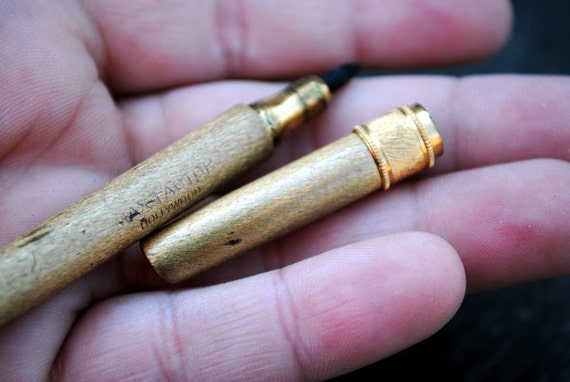
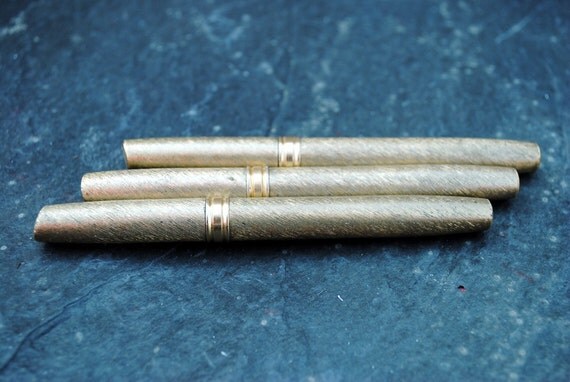
The next time you watch one of the classics, or gasp over some beautiful actress in a black and white movie still shot, think about the fact that a large part of what you love about it is the essence of Max Factor. The full lips, the shimmery hair, the flawless face--they attract you because of the kitchen experiments of a poor Polish immigrant, a man who helped make screen stars into beauty icons. And if you happen to collect vintage makeup, check out these recent additions to our Etsy shop:

1950s Max Factor Hollywood Black Eyeliner
1950s eyeliner, in our Etsy shop
1950s Max Factor Hollywood Mascara Tube
1950s Max Factor mascara tubes, in our Etsy shop